
Monday 29th June – 6:00pm BST
🌍 FIFA World Cup – Round of 32 ⚽
🇧🇷 Brazil vs. Japan 🇯🇵
| ⚽️ BET 1: Bruno Guimarães to have an assist 💷 1pt Best Odds: 6.00 at Boyle Sports ⚽️ BET 2: Both Teams to Score/Over 2.5 Goals 💷 1pt Best Odds: 2.50 at Sky Bet ⚽️ BET 3: Daichi Kamada to have a shot on target 💷 1pt Best Odds: 3.60 at William Hill |
Prior to the tournament, many so‑called experts suggest Brazil’s midfield will be overrun, yet the evidence from the group stage tells a very different story — even if those performances came against their weaker opponents in Group C. The experienced Casemiro, the enforcer, hammering in the tackles — four against Scotland, six against Haiti, and setting the tone physically, and since Carlo Ancelotti brought him back into the fold, this has massively freed up Bruno Guimarães.
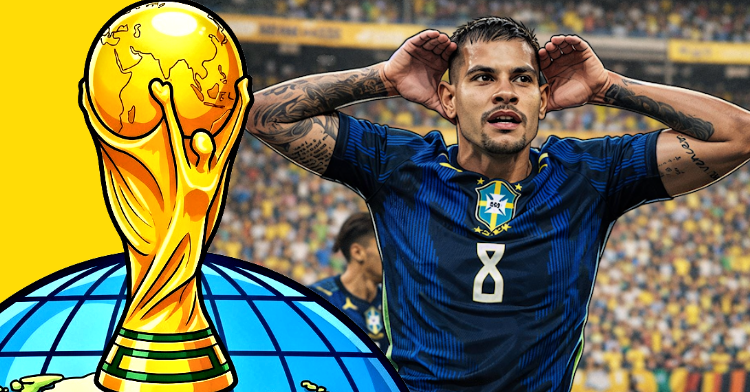
Guimarães has been devastating, producing two assists against Scotland and another versus Morocco, while creating five key passes across the tournament. This past season, he produced seven assists for Newcastle United, and was created Paulo Henrique’s goal in a Last October friendly against Japan. Additionally, he will be taking corners. I like him to have an assist at 5/1 with Boyle Sports.
The call up of Fabinho had everyone wincing, but panic is over, as his role has been reduced to cameo appearances, an experienced head brought on to break rhythm and commit tactical fouls, as shown by his yellow, minutes after coming on, against Scotland.
Then there’s Danilo Santos, the energy Brazil need when Casemiro tires or when an extra body is required in midfield. He’s been on fire for Botafogo this season, scoring ten goals and providing three assists in 25 matches across all competitions, averaging 0.72 shots on target per 90. With that blend of creativity, control, and bite, Brazil’s midfield looks anything but vulnerable, it’s balanced, dynamic, and built to provide the awesome attack support, rather than be overrun.
Japan will provide a far sterner examination, and it brings us back to Brazil’s most obvious vulnerability: the full‑backs. On the right, 34‑year‑old Danilo really a centre‑back playing out of position, while Douglas Santos on the left is 32 and far from the marauding, explosive full‑backs Brazil once produced. Those days of flying wide defenders are long gone. The trade‑off is clear: Brazil sacrifice overlapping flair for defensive stability, which helps them shift into an aggressive, fluid 4‑2‑4 when they attack. But that same top‑heavy structure comes with a major warning label, it can leave the team badly unbalanced, creating dangerous pockets of space for opponents to exploit on the counter.
Last October, as I mentioned earlier, Japan overturned a 2–0 deficit to beat Brazil 3–2 in a friendly — a result that underlines just how resilient the Samurai Blue have become. They’ve been a tough side to put away for the past couple of years, and their Group F campaign reflected that, with draws against both the Netherlands (2-2) and Sweden (1-1). If this tie drags into extra‑time, their intensity may start to fade, and Brazil, with the likes of Gabriel Martinelli, Endrick and Igor Thiago on the bench, are better equipped to capitalise when legs begin to tire.
Japan have never won a World Cup match beyond the group stage, and this is the point where Brazil’s depth and quality should tell. Japan absolutely have the tools to trouble Brazil, and I fully expect them to get on the scoresheet, but over 90 minutes or even 120, Brazil’s firepower, experience and bench options give them the edge.
Ancelotti’s men come into this clash in strong form, winning five of their last six and regularly producing high‑scoring games, with six of their previous seven featuring three or more goals. Japan, however, are an entirely different calibre of opponent, they have lost only two of their last 28 games and have become one of the most consistent, hard‑to‑beat sides in world football.
They also tend to start fast, having opened the scoring in seven of their last eight matches. All of that sets up a fascinating contrast: Brazil’s firepower and momentum against Japan’s remarkable resilience.
The Japanese carry a real attacking threat and Daichi Kamada is one of the biggest reasons why. The Crystal Palace midfielder has been decisive throughout the group stage, scoring twice — once with a unusual back‑heel finish in the 4–0 win over Tunisia, and once with a well‑timed header from a corner against a far stronger Netherlands side. Japan don’t generate huge shot volumes, but they’ve been ruthlessly efficient, and Kamada embodies that clinical edge: he has scored with his only two attempts at this tournament, extending his run to six goal contributions in his last 12 starts for the national team. If you can call that goal against Tunisia an attempt by the way.
Japan’s movement has been slick, their work‑rate unmatched, and their counter‑attacks remain one of the fastest in the competition. But this is a different level of test. Japan have never won a World Cup knockout match in four attempts, and breaking that barrier requires exploiting every weakness Brazil show. Manager Hajime Moriyasu believes the key lies in the “pocket” spaces — the deep channels between Brazil’s centre‑backs and full‑backs — areas Kamada attacks instinctively with late runs and clever positioning.
If Japan are going to trouble Brazil again, Kamada’s timing, his ability to arrive unmarked, and his knack for producing composed finishes will be central to their threat. He’s in form, he’s confident, and he’s one of the few Japanese players who consistently turns half‑chances into goals. Against a Brazil side vulnerable when dragged out of shape, Kamada’s presence in those pockets could become one of the defining factors of the night.
Will Burns
Follow us on Twitter at @TheIntlBreak
Follow us on Facebook at @TheIntlBreak
Follow us on Instagram at @TheIntlBreak
Please gamble responsibly. BeGambleAware.org